As a mother and an early childhood educator, I know that one of the greatest comforts a parent can have is knowing their child is spending the day in a safe, nurturing, and thoughtfully cared-for environment.
At Bloom Academy, we believe childhood should be filled with messy discoveries, creative adventures, and hands-on exploration. Behind those experiences is an important responsibility: maintaining clean, healthy learning environments where children have the freedom to explore, discover, and thrive.
When parents think about choosing the right preschool or childcare center, they naturally consider the teachers, curriculum, classroom environment, and educational opportunities.
But there is another important question every family deserves to ask:
What happens behind the scenes to keep my child’s school clean and healthy throughout the day?
It’s an especially meaningful question during cold and flu season, when families are thinking more carefully about germs, illness prevention, and the daily routines that support children’s well-being.
At Bloom Academy, cleanliness is not something we address only at the end of the school day. It is an ongoing responsibility shared by our teachers, kitchen staff, support teams, school administrators, and professional cleaning partners.
From the moment our classrooms open until the last little backpack heads home, thoughtful cleaning and sanitizing practices are woven into our daily operations.
And while no childcare environment can eliminate every germ or prevent every childhood illness, consistent cleaning practices, appropriate sanitation, and healthy hygiene habits are important parts of creating a healthier learning environment.
Why Clean Learning Environments Matter in Early Childhood
Young children experience the world through exploration.
Infants discover new textures by reaching, touching, and sometimes placing objects in their mouths. Toddlers enthusiastically move between toys, learning centers, and classroom activities. Preschoolers build friendships through shared materials, imaginative play, and hands-on discovery.
These experiences are essential to early childhood development. They also mean that maintaining clean environments requires special attention.
According to the Centers for Disease Control and Prevention (CDC), cleaning, sanitizing, disinfecting when appropriate, and practicing good hand hygiene are important measures for reducing the spread of germs in early care and education settings.
Cleaning removes dirt and many germs from surfaces. Sanitizing reduces germs to levels considered safe under applicable standards, while disinfecting uses products designed to kill certain germs when used according to their directions.
Each process serves a different purpose.
In early childhood settings, understanding these differences helps educators select appropriate cleaning methods for the surfaces, materials, and situations they encounter throughout the day.
At Bloom Academy, our teams follow established cleaning, sanitizing, and disinfecting procedures designed around the unique needs of young children.
We want our classrooms to be places where children can enthusiastically explore their surroundings while our educators maintain the routines that support their health and safety.
A Clean Classroom Begins Before the First Child Arrives
Imagine a Bloom Academy classroom early in the morning.
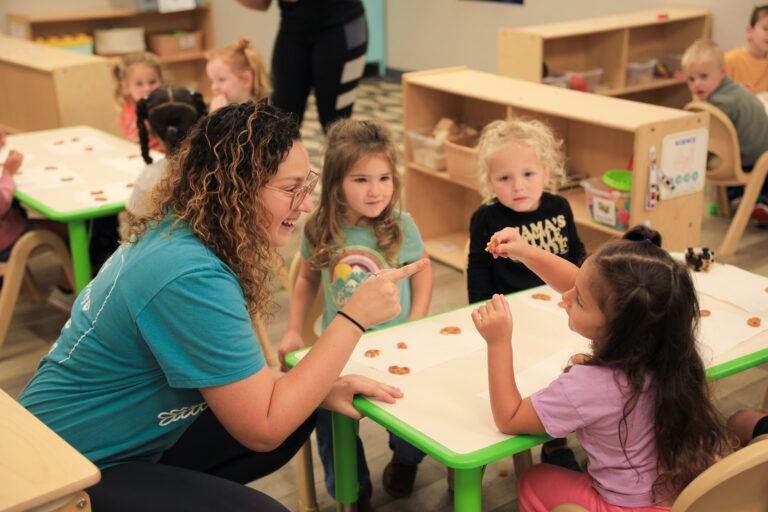
The learning centers are ready for exploration. Colorful books and educational materials are waiting for curious little hands. Tables are prepared for the day’s activities, and the classroom is welcoming and organized.
Before families begin arriving, our team has already started preparing the environment.
Staff members check the results of the previous evening’s cleaning, inspect classrooms for potential hazards, prepare clean materials, and verify that necessary supplies are available.
These opening procedures are an important part of our daily routines.
But preparing a classroom is only the beginning.
Throughout the day, teachers clean spills promptly, clean and sanitize tables and commonly used surfaces as needed, and follow established hygiene procedures during meals, bathroom routines, and diaper changes.
During scheduled midday routines, classroom teams also attend to toys, learning centers, shelves, changing areas, and other frequently used materials.
At closing, classrooms receive additional attention as teams wipe surfaces, clean and sanitize appropriate materials, collect laundry, remove trash, and prepare spaces for professional cleaning services.
This ongoing approach reflects an important philosophy at Bloom Academy:
A clean learning environment is maintained throughout the day, not simply restored after the children leave.
Two Layers of Cleaning: Professional Services and Daily Classroom Care
One of the ways Bloom Academy supports consistent cleanliness is through two complementary layers of care.
The first is professional cleaning.
Our contracted cleaning partners provide scheduled after-hours janitorial services for designated areas of our schools. Depending on each location’s cleaning agreement, these services may include floors, lobbies, hallways, offices, shared restrooms, and other common areas.
The second layer is active daily cleaning performed by Bloom Academy employees.
Our classroom, kitchen, and support teams maintain the spaces and materials children use throughout the day. This includes classroom surfaces, toys, sinks, changing areas, meal-service spaces, laundry, restrooms, and waste removal.
Why is this distinction important?
Because a classroom can be professionally cleaned in the evening and still require ongoing attention the following morning. A spilled cup of water, a toy placed in a toddler’s mouth, or a table used for a sensory activity cannot wait until the end of the day.
By combining professional cleaning services with daily staff responsibilities, we can address everyday needs as they arise while maintaining scheduled cleaning routines across our schools.
Little Hands, Healthy Habits: The Importance of Handwashing
If you’ve ever watched a toddler discover a puddle, investigate a leaf, or enthusiastically explore a sensory activity, you know that little hands are almost always busy.
And that’s exactly how childhood should be.
At Bloom Academy, we believe healthy hygiene habits should become a natural part of children’s daily experiences.
Handwashing is one of the simplest and most important habits children can learn.
The CDC emphasizes that washing hands with soap and water helps reduce the spread of germs that can cause illness.
Our educators guide children through handwashing at important moments throughout the day, including:
- Upon arrival at school
- Before and after meals
- After using the restroom or diapering routines
- After outdoor play
- After contact with animals or garbage
- During appropriate classroom transitions
- When additional hygiene precautions are needed
Our handwashing procedures include using clean running water and soap, scrubbing all hand surfaces for at least 20 seconds, rinsing thoroughly, and drying with a clean paper towel.
Teachers provide age-appropriate assistance to infants and younger children as they develop these skills.
For a toddler, learning to wash their hands independently can become a proud accomplishment.
For a preschooler, remembering to wash before lunch is an opportunity to practice responsibility.
And for a VPK student, understanding why handwashing matters can help build awareness of personal health and caring for others.
These may seem like small moments, but they are meaningful opportunities to develop healthy habits that children can carry with them beyond preschool.
Clean Toys, Big Discoveries: Supporting Safe, Hands-On Learning
At Bloom Academy, we believe some of the most valuable learning experiences happen through play.
A toddler stacking blocks is developing coordination and problem-solving skills. A preschooler creating a pretend restaurant is practicing communication and imagination. An infant exploring a sensory toy is beginning to understand the world through touch and movement.
Our commitment to screen-free learning means children spend their days actively engaging with real materials, meaningful experiences, and one another.
And because hands-on exploration is central to our educational philosophy, caring for classroom materials is especially important.
Our teachers follow established routines for cleaning and sanitizing toys, learning centers, mats, shelves, and other classroom materials.
Toys that have been mouthed or visibly soiled are removed from use until they can be properly cleaned.
Scheduled classroom cleaning also includes attention to frequently used materials and learning spaces.
These procedures allow children to continue experiencing the benefits of hands-on learning while our educators maintain appropriate sanitation practices.
We believe children should have the freedom to explore, and our responsibility is to thoughtfully care for the environment where that exploration takes place.
Healthy Mealtimes Begin with Clean Spaces
Mealtimes are some of the most meaningful moments in a preschool day.
Children gather with friends, practice conversations, learn table manners, and develop greater independence. For younger children, even learning to hold a spoon or drink from a cup can be an exciting milestone.
Behind these everyday experiences is a commitment to maintaining clean, healthy spaces where children can enjoy their meals.
At Bloom Academy, our kitchen teams follow established cleaning and sanitizing procedures before, during, and after meal service. From food preparation surfaces and utensils to kitchen equipment and dining areas, each space receives thoughtful attention throughout the day.
Daily cleaning, scheduled deep cleaning, and regular kitchen reviews help us maintain consistent standards behind the scenes. Our classroom teams also care for the tables and surfaces children use during meals, ensuring cleanliness remains a priority beyond the kitchen.
These routines may not always be visible to families, but they reflect the care and attention that goes into every part of a child’s day at Bloom Academy.
Beyond the Classroom: Caring for the Entire School Environment
A child’s preschool experience extends far beyond the classroom.
It includes the welcoming lobby where families begin their mornings, the hallways filled with little footsteps, the restrooms where children practice independence, and the playgrounds where imagination and movement come together.
Each of these spaces contributes to the overall learning environment.
At Bloom Academy, our support teams conduct opening and closing walkthroughs and maintain shared areas throughout operating hours.
They address visible dirt, spills, litter, odors, and other concerns as they arise.
They also help restock essential supplies and keep entrances, shared bathrooms, water fountains, sign-in areas, and outdoor spaces tidy.
Laundry and waste removal are additional parts of our daily routines.
Soiled linens, towels, and washable classroom materials are collected and laundered according to established schedules.
Trash is removed, containers are relined, and cleaning products and equipment are stored securely and kept inaccessible to children.
These responsibilities may not always be visible to families, but they are important parts of maintaining a comfortable, welcoming school environment.
Cleaning Safely Around Infants, Toddlers, and Preschoolers
Maintaining a clean preschool environment requires more than simply using cleaning products.
It requires understanding how to use them appropriately around young children.
Infants and toddlers explore their surroundings differently from older children. They frequently touch surfaces, handle toys, and place objects in their mouths.
These developmental characteristics make safe cleaning practices especially important.
At Bloom Academy, staff follow established procedures that include removing visible soil before sanitizing or disinfecting, using approved cleaning products, and following manufacturer instructions.
This includes observing required surface contact times and taking appropriate precautions to prevent unsafe exposure to chemicals, sprays, or residues.
Cleaning tools and products are stored securely and kept out of children’s reach.
Our teams also follow established procedures for handling blood and potentially infectious body fluids, including appropriate protective measures.
These practices reflect our belief that cleanliness and child safety must always work together.
Consistency Matters: How We Maintain Accountability
Maintaining a clean school environment requires teamwork, clear expectations, and consistent follow-through.
At Bloom Academy, cleaning responsibilities are supported by established opening, midday, and closing checklists.
These operational checklists help our teams understand what needs to be completed and when.
School administrators review completion, follow up on concerns, and coordinate with professional cleaning partners when additional attention is needed.
Because every Bloom Academy campus has its own layout and operational needs, individual schools also follow location-specific procedures and cleaning service agreements.
This structured approach helps us maintain accountability while recognizing the unique needs of each school.
For families, this means cleaning and sanitation are not simply informal expectations.
They are part of our established daily operations.
What Parents Should Look for When Choosing a Clean and Healthy Preschool
When families tour a preschool or childcare center, they often notice the colorful classrooms, friendly teachers, and engaging learning materials.
These are important parts of the experience.
But parents should also feel comfortable asking questions about the school’s cleaning practices.
A thoughtful preschool tour should provide opportunities to understand how the school maintains its environment.
Consider asking:
How often are classroom toys and learning materials cleaned?
Young children frequently share materials, so understanding how toys are cleaned and when soiled items are removed from use can provide valuable insight.
What happens when something needs to be cleaned during the school day?
A strong daily cleaning approach should address spills, surfaces, and other immediate needs rather than relying entirely on evening cleaning.
How are children taught healthy hygiene habits?
Look for age-appropriate handwashing routines and teachers who help children build independence through everyday activities.
Are cleaning procedures monitored by school leadership?
Clear expectations and administrative oversight can help support consistency.
How does the school balance cleaning practices with children’s safety?
Families should feel comfortable asking how cleaning products are stored and used around infants, toddlers, and preschoolers.
At Bloom Academy, we welcome these conversations.
We believe families deserve to understand the care that goes into maintaining the spaces where their children spend their days.
Our Commitment to Clean, Safe, and Nurturing Preschools in Southwest Florida
For families searching for infant care, toddler programs, preschool, or VPK in Naples, Cape Coral, Port Charlotte, Punta Gorda, and surrounding Southwest Florida communities, choosing the right early childhood education program is an important decision.
Educational quality, nurturing teachers, meaningful relationships, and engaging learning experiences all matter.
So does the environment where those experiences take place.
At Bloom Academy, we believe exceptional early childhood education involves caring for the whole child.
That includes supporting children’s intellectual, social, emotional, and physical development while maintaining environments that reflect our commitment to health and safety.
Our screen-free educational philosophy encourages children to learn through hands-on discovery, meaningful relationships, movement, and exploration.
Our cleaning and sanitizing practices support those experiences by helping maintain the spaces and materials children use every day.
Together, these commitments reflect our belief that children deserve both a nurturing educational experience and a thoughtfully maintained learning environment.
A Healthy Place to Learn, Play, and Bloom
Some of the most beautiful moments in childhood are wonderfully messy.
At Bloom Academy, we celebrate these moments because they represent curiosity, creativity, independence, and growth. And behind them is a dedicated team working to maintain the environment where they happen.
As a mother, I understand that parents cannot see every moment of their child’s day. But they deserve to feel confident that the same care and attention they provide at home continues in the classroom.
From our teachers and kitchen staff to our support teams, administrators, and professional cleaning partners, every person plays a role in caring for our schools.
Our goal is not to create an environment where children are afraid to make a mess.
It is to create a place where they can confidently explore, learn, and grow, supported by thoughtful routines and people who genuinely care.
Because childhood should be filled with discovery, and parents deserve the peace of mind that comes from knowing their child’s learning environment is cared for every day.
Whether you are exploring infant care, toddler programs, preschool, or Florida’s Voluntary Prekindergarten program, we invite you to experience the Bloom Academy difference.
Schedule a personalized tour at a Bloom Academy campus near you to meet our educators, explore our classrooms, and discover how our commitment to safe, nurturing, screen-free learning environments helps children bloom.
Visit www.bloomacademypreschool.com to learn more or schedule your tour.
Research and Sources
The health, hygiene, and sanitation principles discussed in this article are informed by the following resources:
Centers for Disease Control and Prevention (CDC)
- Guidance for cleaning, sanitizing, and disinfecting in early care and education settings
- Handwashing guidance and the importance of proper hand hygiene
- Strategies for reducing the spread of infections in schools and childcare environments
Website: https://www.cdc.gov
American Academy of Pediatrics (AAP)
- Caring for Our Children: National Health and Safety Performance Standards, developed with national early childhood health and safety partners
- Guidance on healthy environments and infection prevention in early childhood settings
Website: https://www.healthychildren.org